Monday, February 27, 2012

On Finch's Secret Stache Stout

Finch's Beer Company, based out of Chicago, has been open for less than a year and they have already extended distribution to Wisconsin and Indiana. Helped by their accessible Golden Wing (golden ale) and Cut Throat (pale ale) flagships, they are seeing quick success that must be demanded of their (relatively) large brewing capacity. Though the distribution extends wide, I did not expect any but the two core beers to be distributed outside their home market of Chicago. So I was pleasantly surprised to see Secret Stache Stout at my local Woodman's grocery store in Rockford.  And as I've said before, I like stouts.  So another stout on the market is good news for me.

The bottle represents a departure from their canned mainstays, and the artwork is quite interesting. A finch handing a beer to another bird that is being weighed down by a ridiculously large mustache. The reverse label shows an unlocked padlock sugesting that this may be the beginning of a limited edition series of specially branded brews.

Pouring a very violent pour produced almost no head. What there was was the color of medium toast. "soap bubbles" linger on the sides.

Not much going on aroma wise. Some general roast character and a hint of vanilla.

The taste is of espresso and vanilla. A bit of oak (probably from the vanilla, not actual oak) and alcohol linger in the finish. Medium-thick body and a lot of residual sweetness. This one is built like tank, but at 5.3% you can enjoy all 650ml without waking up the next day wondering what happened.

The low carbonation is perfect for the style. This would do well on nitro.

Overall, a mixed bag. I wish there were more aroma and a touch less sweetness, but the flavor and carbonation are spot on. Not bad for a bomber priced under $5. This is the best I’ve seen from Finch’s thus far.

Saturday, February 25, 2012

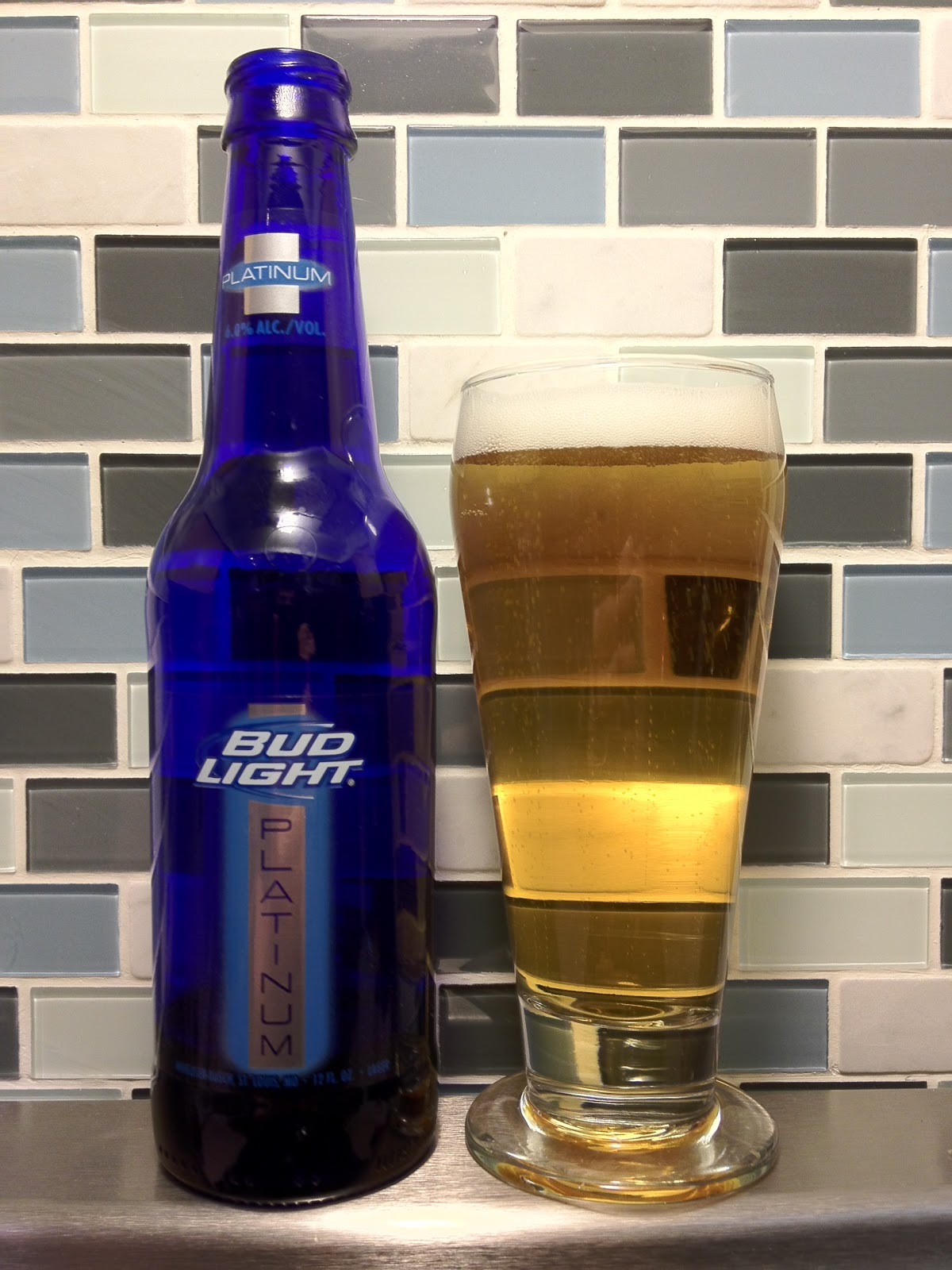
On Bud Light Platinum

I know, I know. We're supposed to hate mass market lagers. They represent everything that craft beer is not. Big industrial machines pumping out vaguely yellow, vaguely flavored, slightly alcoholic water. But you know what? I don't care. The way I see it, beer is beer. Luciano Pavarotti, the popular singer, once said "I do not accept that the word 'pop' is a derogatory word. If the word 'classic' is the word to say 'boring', I do not accept it. There is good and bad music." Likewise, there is good and bad beer and just because it is made by a large, international company doesn't mean it can't be good. So when Anheuser-Busch InBev introduced Bud Light Platinum a couple of months ago, I decided I should give it a try. I was not disappointed.

Bud Light Platinum pours crystal clear and golden yellow. Slightly darker than regular Bud Light from what I remember. The snow white head dissipates quickly.

Slightly sour pilsener malt aroma. Flavor of sweet malt. A touch of honey, perhaps, but mostly just clean pilsener malt. Not as much adjunct flavor as regular bud light.

The body is the weak link and it borders on watery, but doesn’t quite cross that line. Highly carbonated and very drinkable.

Overall, it’s good for a BMC beer and I can appreciate it for what it is. This could be my weeknight drinker if it were a little lower in alcohol. But I guess that would defeat the point.

No, it's not the best beer ever, but when taken in context it holds its own. I happen to like light lagers and pilsners and Bud Light Platinum represents one of the best of the style. Miller may be playing catch-up with this one.


P.S. - I'm glad I like it... I had to buy a 12 pack.

Wednesday, February 15, 2012

On New Glarus Road Slush

Winter means stout, and in Northern Illinois (and Wisconsin, the home of this beer), winter means ice and snow. So today, in honor of the slush that I lovingly kick from my wheel well, I'm drinking New Glarus Road Slush. I've reviewed New Glarus previously and I have much respect for the brewery. Combine that with my love of low(er) gravity stouts, and this beer makes a perfect match.

Road Slush starts with lots of roasted aroma. Many stouts fall flat on aroma, but no this one. Full roasted aroma. That smell in fall when people are burning leaves... that’s this beer. Full. Warm. Inviting. Other aromatics of raw grain (oats) and a touch of honey.

The first taste brings out more sweet notes than the aroma. The taste of roast is still strong, but not quite as dominant. Coffee, chocolate and cherries come through. Some grain sits easy in the background. Just enough to keep things interesting.

The palate brings a bit too much carbonation for my taste. A beer of this caliber doesn’t need to hide behind 15psi of carbonation. Otherwise, the beer is quite smooth.

Overall, probably not the best oatmeal stout I’ve ever had, but it’s up there. The aroma is this beer’s strong suit and is what makes it unique.

Monday, December 12, 2011

On Mikkeller Single Hop: Simcoe

Simcoe is the name of the game today. My third in a series of reviews of Mikkeller's Single Hop Series (one and two here) showcases the Simcoe registered trademark hop.  Simcoe® can be a hard hop to get. Select Botanicals Group, LLC, the owners of the Simcoe® varietal, have only licensed three farms to grow the hop, all in Washington.

Simcoe starts with spices (pepper), earthiness, and some pine. A bit odd considering the citrus power of Simcoe hops, but the age may be a factor in this. I can't read the code date on the cap, but Rate Beer lists this as a retired style (get it while you can).

The color is dark redish-orange. Reminds me of the color of 70s carpet or upholstery. Moderate head retention leaves thin wisps of bubbles across the surface. In the mouth, caramel malt and piney hops give way to some citrus before mild alcohol finishes the show. The beer is medium bodied with medium-high carbonation. A bit oily.

Overall, this is the best of the single hop series I’ve had so far, but I do wish I had it fresher.

Single hop series reviews:

Monday, December 5, 2011

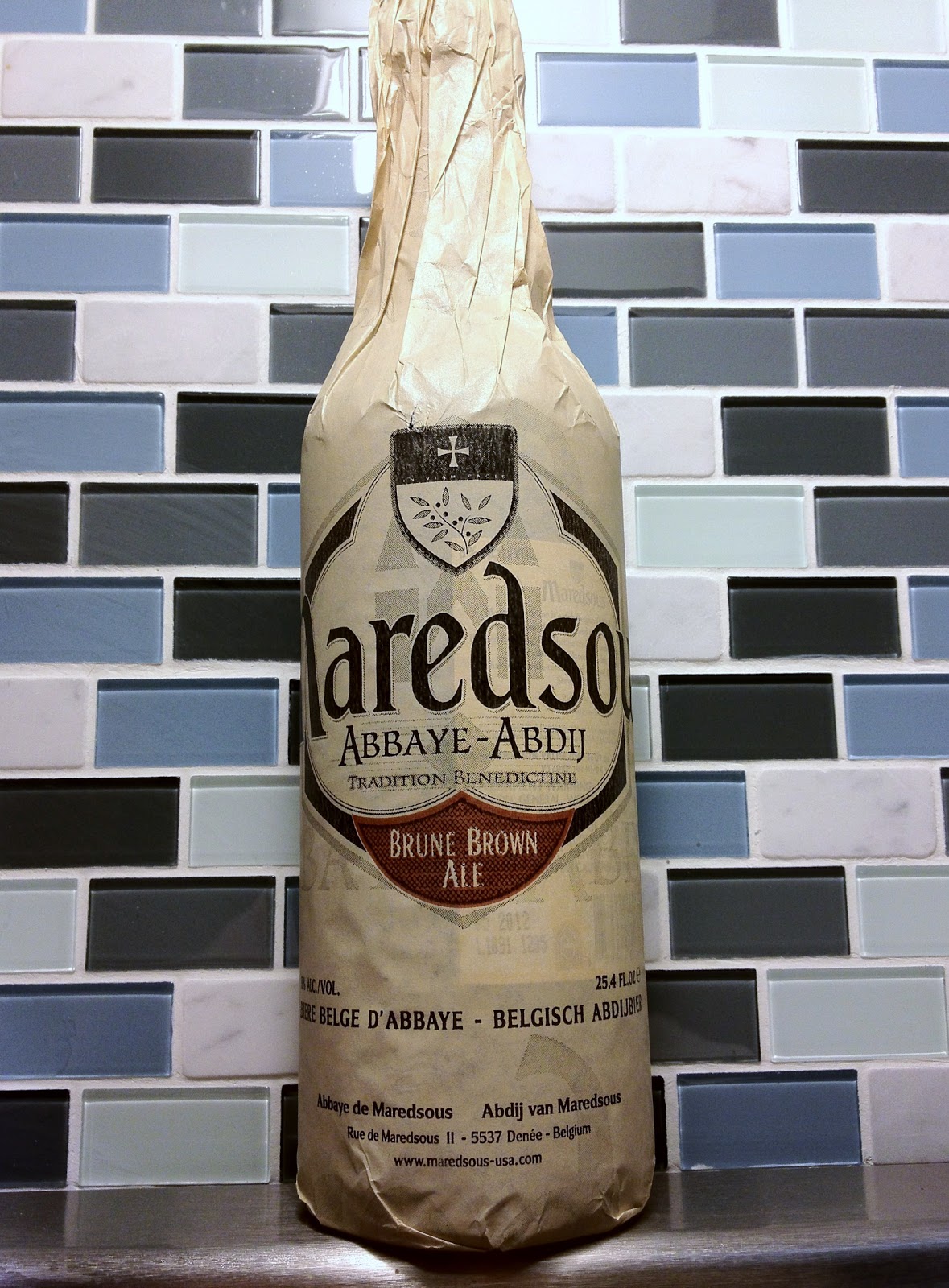
On Abbaye de Maredsous 8 Brune

Today is a day to celebrate.  Today is Repeal Day.  Seventy-eight years ago today the 21st Amendment to the Constitution of the United States, which repealed the 18th Amendment ban on the " manufacture, sale, or transportation of intoxicating liquors" was ratified, somewhat ironically, by Utah. The repeal of the 18th Amendment is a reason to celebrate. Not just because it restored the right of Americans to drink, but because it restored the right for Americans to conduct themselves in the manner of their choosing.

The 21st Amendment is not merely about being able to get rip-roaring drunk, it's about the most basic of American rights: freedom.  Freedom to drink.  Freedom to express oneself through a chosen art.  And freedom to experience the wide tastes made available through that artistic expression.  And so, today I celebrate.

As it turns out, the dark ages of American beer were just beginning, but luckily today we have a few more options to celebrate repeal day than did the ciserones of 1933. And to that end, I'll be enjoying a bottle of Maredsous 8 Brune, a fine Belgian dubbel produced by Duvel under license from Maredsous Abbey.

The paper wrapping not only protects this bottle from exposure to light during it's 4,100 mile trip to Chicago and on store shelves, but it also implies mystery.  What could be behind the paper curtain?  It's a present waiting to be opened.  Once opened the hefty bottle continues its classic, medieval abbey theme (even though the brand originated in the 1960s), again begging you to taste the history and bygone lifestyle inside.  

"Drink Before: 05/2012" on the cork cage. Maredsous 8 presents itself with a dark, dark, ruby red - Nearly black - color and a long lasting, linen colored head with the consistency of whipped egg whites. Moderate lace clings to the glass.

Caramel, honey, fig, molasses, and chocolate dance an elephant ballet of aromas. Each are big and powerful but they gracefully whisp across the nose. The taste is similar to the aroma, but not as forward. Dark fruit and molasses pull forward first, then some honey shows itself. Hop bitterness balances the sweetness just a bit. The slightest bit of yeast autolysis comes in the end but it's not distracting and is perhaps to be expected in a bottle conditioned beer nearing the end of it's drinkability date. Lingering flavors of molasses and caramel present at the end.

Despite the diabetes educing descriptors of the aroma and flavors the palate is kept relatively clean by just enough carbonation and a surprisingly light body. Great beer.